Rinnai Tankless Water Heater Repair in Greer, SC
A Rinnai tankless that shows a code or quits making hot water usually tells you why, if you know how to read it. We service Rinnai tankless water heaters: error codes, ignition and flow problems, flushing and descaling, condensate and venting. Here's what the common codes mean in Rinnai's own manuals, and what's safe to check before you call.
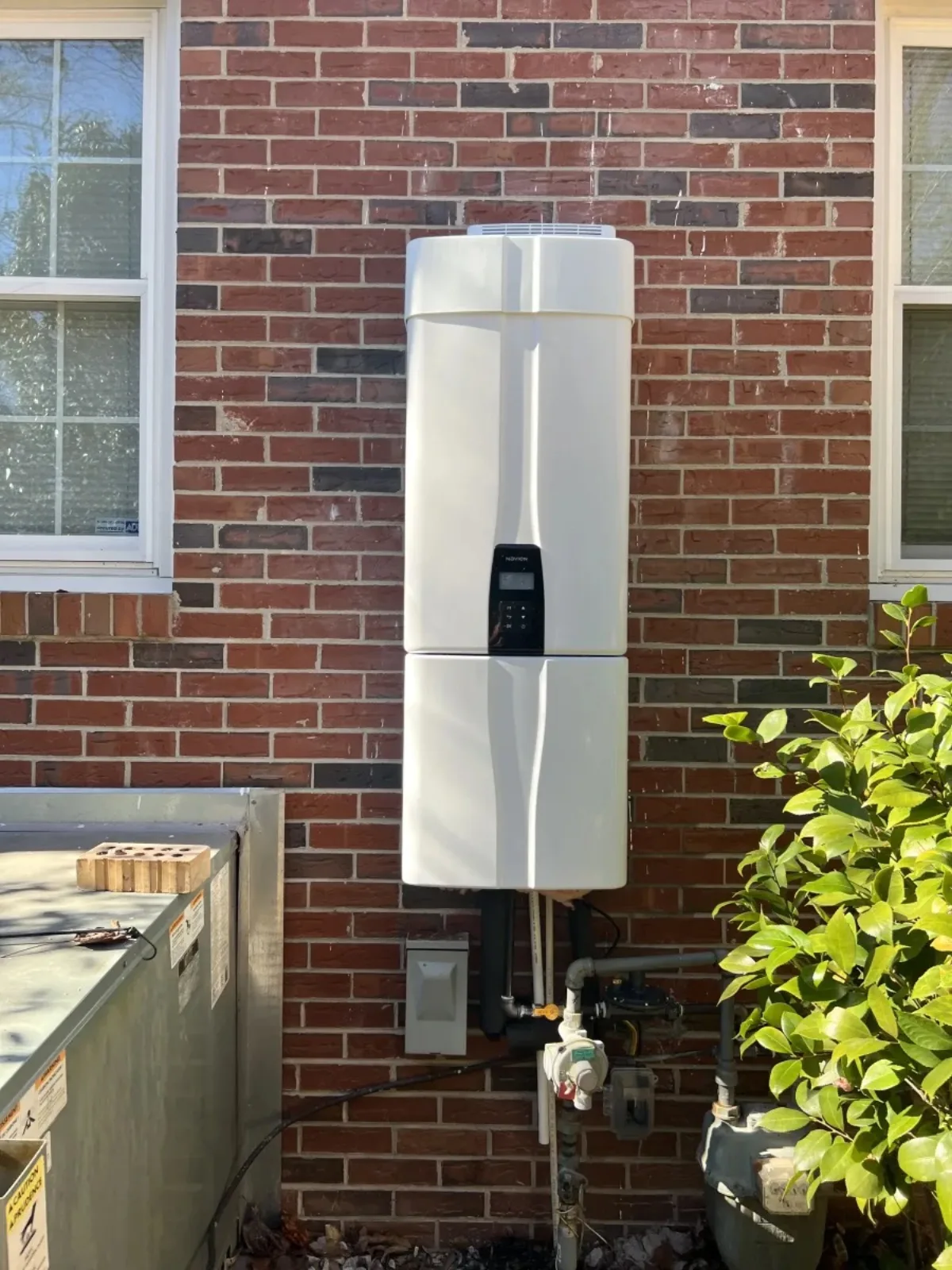
About This Service
Rinnai's code tables are written for the installer as much as the homeowner. Above its code table, Rinnai's RE manual warns that some of the checks should be performed by a trained and qualified professional, and that consumers should never attempt any action they aren't qualified to perform. Its full diagnostic guide is for trained professionals only. Below, we point out which checks are safe for a homeowner.
Code 11 is no ignition: the heater isn't lighting. Rinnai's first checks are that the gas is turned on at the water heater, the meter or the propane cylinder, and, on propane, that there's gas in the tank. Rinnai says some of the checks on its list should be done by a trained and qualified professional; past the gas checks, it covers air in the gas line, gas type and pressure, gas line and regulator sizing, the igniter, the gas valves, the flame rod and the burners. Code 12 is No Flame (flame failure in Rinnai's diagnostic guide), with the same gas checks first. Code 10 is an air supply or exhaust blockage; on condensing SENSEI models it also means the condensate trap is full, which Rinnai says happens when the condensate drain line clogs or freezes. Code 61 is the combustion fan, 63 is low recirculation flow, and 17, on SENSEI models only, is a venturi blockage. Two codes are maintenance alerts rather than failed parts. SS (Service Soon, also written 55) is a time-based reminder the installer can set during installation; when it shows, Rinnai says it's time to flush and service the heater. LC means scale has built up in the heat exchanger and it needs to be flushed to prevent damage. Rinnai's own FAQ says error codes vary by product, and to contact Rinnai or your installer to find the root cause.
No code and no hot water is usually flow. Rinnai says its tankless heaters need at least 0.4 to 0.6 gallons a minute through the hot side to ignite and 0.26 to keep running, so a single faucet barely open may not start it. Its possible fixes include lowering the temperature, cleaning the heater's inlet water filter, cleaning or removing aerators and replacing low-flow fixtures; if none of those work, call your installer or plumber. In a power outage, Rinnai says the heater won't operate at all.
Flushing is where water hardness matters. The water hardness table in Rinnai's SENSEI RX manual lists no treatment and no flushing interval for soft water, up to 60 mg/L, and flushing once a year for residential use from 61 mg/L up. Rinnai's flushing page says to flush at least once a year, using 4 gallons of undiluted white vinegar and never chemical solutions, and its FAQ says the job should be done by a professional installer. City water around here is soft: Greenville Water averages under 6 mg/L of hardness, SJWD about 17 and Greer CPW about 35. Wells vary, so test before deciding. Either way, Rinnai's manual says scale damage isn't covered by the warranty, and it strongly recommends isolation valves so the heat exchanger can be flushed.
Freezing is the other Upstate risk. Rinnai's SENSEI RX manual says the heater protects itself down to an outside air temperature of -22°F for indoor installs or -4°F for outdoor ones, as long as it has 120-volt power and is sheltered from direct wind, but that the freeze protection won't keep the outside piping and valves from freezing. In a power or gas outage below freezing, Rinnai says to drain the heater, the condensate trap and line, and the relief valve. Its FAQ says the pipes and valves to the heater must be heat traced and insulated. Freeze damage isn't covered by the warranty.
On repairs and installs, we do the tankless work in our price book: ignition and flow diagnostics, flow sensors, flame rods and igniters, inlet filter cleaning, flushing and descaling, condensate drains and neutralizers, isolation valve kits, heat exchangers, and tank-to-tankless gas conversions. Rinnai's warranty requires genuine Rinnai repair parts and a qualified professional properly trained for the repair.
Signs You May Need Rinnai Tankless Water Heater Repair
- Code 11, 12 or 10 on the controller
- No hot water at a single faucet but fine at others
- Hot water that turns cold mid-shower
- SS or LC on the display
- A condensate line that drips, clogs or froze
- A Rinnai that hasn't been flushed since it was installed
What's Included
- Error code diagnosis: ignition, flame, venting and condensate
- Ignition and flow diagnostics
- Flame rod, igniter and flow sensor replacement
- Flushing and descaling
- Inlet water filter cleaning
- Condensate drain correction and neutralizer replacement
- Isolation valve kit installation
- Heat exchanger replacement
- Tank-to-tankless gas conversion
Why Choose Us
- We read the code before we touch the heater
- Flushing set to your water, not a guess
- Licensed in South Carolina and North Carolina
- Veteran-owned local plumber in Greer
Rinnai Tankless Water Heater Repair FAQ
Rinnai Tankless Water Heater Repair Near You
We provide rinnai tankless water heater repair to homeowners and businesses across the Upstate SC area. Select your city to see local service info.
Sources
- Rinnai: RE series product page and installation & operation manual
- Rinnai: SENSEI RX product page and installation & operation manual
- Rinnai: residential FAQ
- Rinnai: flushing your Rinnai tankless water heater
- Rinnai: SENSEI residential limited warranty (Oct. 2024)
- Greenville Water 2025 Water Quality Report
- SJWD Water District 2025 Water Quality Report
- Greer CPW 2025 Water Quality Report